
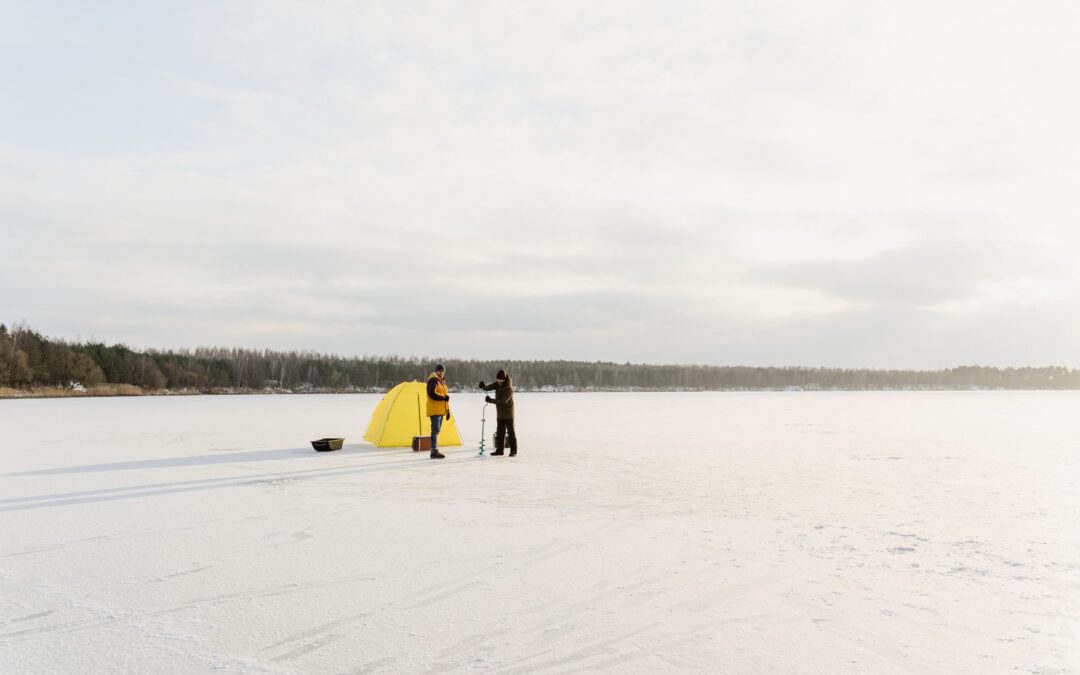
Safe ice thickness for walking is at least 4 inches of new, clear, solid ice, according to commonly cited guidance from state wildlife and natural resource agencies. Thicker ice is needed for snowmobiles, ATVs and vehicles, and no measurement guarantees safety. Always check conditions with a local bait shop or state agency before heading out.
How thick should ice be to walk on?
Most agencies use 4 inches of clear, solid ice as the minimum for walking or ice fishing on foot. That number applies to new ice that has frozen evenly, not to old, thawed and refrozen ice.
Guidance for machines is higher. Many agencies list roughly 5 to 7 inches for a snowmobile or ATV, and considerably more for cars and trucks. Exact numbers differ from state to state, so check your state’s wildlife or natural resources agency for its published chart.
Color tells part of the story. Clear ice that looks blue or black is generally the strongest. White or cloudy ice, often formed from snow and slush freezing, is weaker, so it takes more thickness to carry the same load.

How do you check ice thickness?
Drill or chop a test hole and measure it with a tape measure. Do not rely on a single hole, because ice can vary a great deal across one lake.
- Start at the shore and test the ice there before stepping out.
- Use an ice auger, spud bar or chisel to make a hole, and measure the solid ice, not the slush on top.
- Drill another hole every so often as you move out, and again whenever the ice looks different.
- Check the color and look for cracks, wet spots and open water.
- Carry ice picks on your jacket, a rope, and wear a life jacket or flotation suit.
- Tell someone where you are going and when you plan to be back.
What makes ice unsafe even when it is thick enough?
Moving water, weak spots and weather swings can make ice unsafe no matter what one hole shows. Ice over current is often thinner than ice nearby.
Watch for these trouble spots:
- Inlets, outlets, narrows and areas near bridges where water moves
- Springs and places with underwater vegetation or rocks
- Docks, aerators, bubblers and shoreline debris
- Pressure ridges and large cracks
- Slushy or dark, wet-looking patches
Snow acts like a blanket, slowing freezing underneath, so ice beneath a deep snowpack may be thinner than it looks. A stretch of warm days or rain can also weaken ice quickly, even if it was fine last week.
What should you do if you fall through the ice?
Try not to panic, turn toward the direction you came from, and kick your legs while pulling yourself onto the ice. That is the ice you already know held you.
Use ice picks or your hands to dig in and pull forward. Once your torso is out, keep kicking, then roll away from the hole instead of standing up, to spread your weight.
Get to shelter and out of wet clothes as soon as you can. Call 911 or seek medical care afterward, even if you feel fine. If you see someone else go through, call 911 first and reach with a rope, pole or ladder from a safe distance rather than walking out to them.
Quick answers
Is 2 inches of ice safe to walk on?
No. Agency guidance generally calls for at least 4 inches of clear ice for a person on foot, and 2 inches or less is considered unsafe. Stay off it.
Does ice freeze evenly across a lake?
No. Currents, springs, depth, snow cover and shoreline features all change how fast ice forms. One safe spot does not mean the whole lake is safe.
Can I trust ice another angler walked on?
Not without checking it yourself. Tracks or shanties show where someone else got through, not whether the ice will hold you, and conditions can change overnight.
Measure the ice every trip, even on a lake you know well, and turn back if anything looks wrong. Your state wildlife agency or a local bait shop can tell you which lakes have had recent trouble.
Courtesy of Daily News Service. Original story: https://dailynewsservice.com/safe-ice-thickness-for-walking/